It has been a winter, Ottawa, and we’ve got the potholes to prove it. The freeze/thaw cycles have taken hold, and it is wreaking havoc on our roads, sidewalks and winter cycling network. The Roads and Parking Services team has sprung into action to address the increased number of potholes throughout the city. In between winter events, and there have been a lot, crews have been filling potholes across the city. Starting this week, we will begin redirecting additional resources and deploying more crews to fill potholes. Don’t look now, but we’ve even brought in the reinforcements; two Pythons have arrived in Ottawa and got to work on Sunday night!
Python pothole patcher
We have currently secured 2 Python 5000 machines, or as we like to call them – Python Pothole Patchers. Try and say that ten times fast. Once they arrived on Sunday evening, they will get to work in different areas throughout the city. They will work 10 hour shifts (day and night) over the next few weeks as we continue to experience freeze/thaw cycles. So, what are they? The Python Pothole Patcher can fill a pothole in less than two minutes. With the operator working safely from inside the cab, workers are protected from oncoming traffic as the work can all be completed without the need of stepping foot outside of the vehicle.
The Python Pothole Patcher is coming to a neighbourhood near you! If you spot our machines working in your community, please wave to our operators from a safe distance. If you see them while travelling, please, do not pass them. They may be filling a pothole but remember, it will only take a few minutes!
Did you know?
- Roads and Parking Services staff maintain approximately 6,000 kilometres of roads, or approximately 13,000 lane kilometres
- Depending on the weather and temperature, our staff work around the clock to clear and remove snow, open catch basins and ditches, repair potholes, mitigate drainage and localized flooding issues, and complete spring clean-up activities – just to name a few!
- The same crews responsible for spreading salt and/or grit during freeze/thaw cycles, are also filling potholes, opening up catch basins and ditches to support melting and water flow during thaws
- In Ottawa, we can see approximately 75 to 80 freeze/thaw cycles over the winter season. As a reminder, freeze/thaw cycles are the leading cause for potholes, which thrive in these types of environments
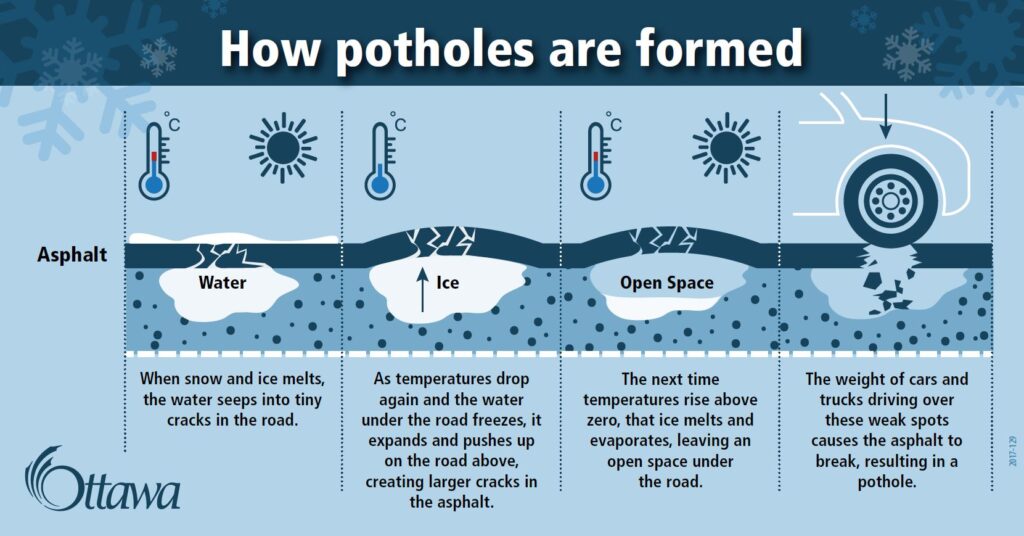
How are potholes formed?
Potholes are formed when water (from rain or melted snow and ice) seeps into small cracks or holes in the road. As temperatures drop, the water under the road freezes and expands pushing up on the road above, creating larger cracks – when the temperature rises above zero, the water evaporates and leaves an open space under the road. The weight of cars and trucks travelling over these weak spots breaks the asphalt, resulting in potholes.
How do we repair potholes?
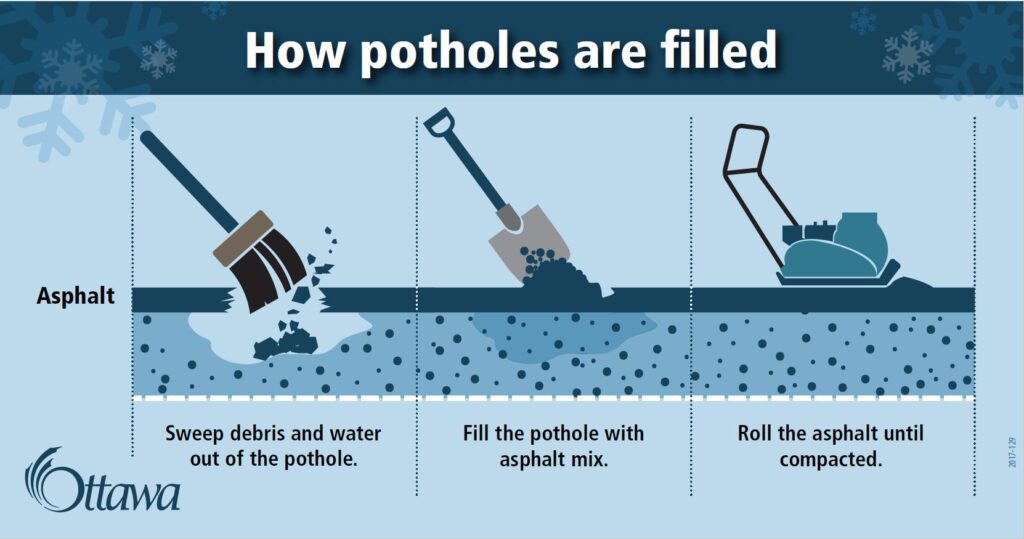
Potholes are filled by cleaning the hole of debris and water, then packing it with asphalt and rolling or pounding it down. At this time of year, some potholes in high traffic areas may need to be refilled more than once. This happens because water works its way back into the hole preventing the asphalt from forming an adhesive bond with the pavement.
Filling potholes in winter
The environment during the winter is not ideal for pothole repairs. The unstable conditions, including ice and water in the holes, as well as the cold temperatures and frequent freeze / thaw cycles, prevents the patch from adhering as well to the roadway making the repair temporary. Products that staff use to repair potholes during the winter months are Cold Patch and Warm Mix asphalt.
Cold Patch asphalt is a blended asphalt material which can be stored for extended periods of time. It can be used in all temperatures, does not require special equipment to compact and can be applied directly to the roadway without heating.
Warm Mix asphalt can be used year-round and produced at a lower temperature using different adhesives in the mix. Once the material is heated, the adhesives become thinner allowing improved workability and flow. The material can be manually compacted with a tamper, or shaped and compacted with power plate tampers or rollers.
Potholes-by-the-numbers
- The total number of potholes repaired this winter season is 52,755
Next steps
Based on the forecast, we are anticipating several freeze-thaw cycles over the coming weeks. The city has already experienced 45 freeze/thaw cycles this winter season. Residents can expect to see our pothole crews across the City. We appreciate your patience as we transition between different winter maintenance activities and prioritize and deploy resources to complete our operations.
I am committed to keeping you informed about potholes, and as our pothole crews are deployed, we will update you on our progress with how many potholes have been filled and the number of crews dedicated to these repairs.
For residents wishing to report a pothole, a service request can be created online.